
The Lamplighters League
Paradox Interactive (2023)
Description
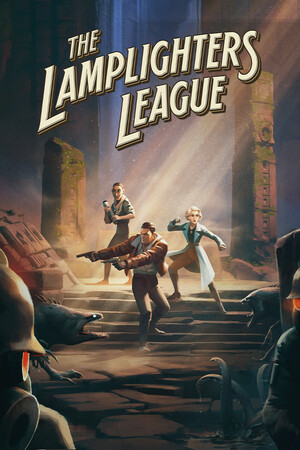
The Lamplighters League is a turn-based tactical strategy game that transports players to an alternate version of the 1930s, steeped in pulp adventure, occult mystery, and noir aesthetics. Released on October 3, 2023, the game was developed by Harebrained Schemes, the studio previously known for *BattleTech* and the *Shadowrun* trilogy, and published by Paradox Interactive. It blends strategic world management with a hybrid combat system that moves between real-time stealth and turn-based tactical encounters.
**Setting and Narrative**
The game draws heavy inspiration from the adventure serials of the early 20th century. The narrative centers on a secret organization known as the Lamplighters League, a group dedicated to keeping powerful, ancient magic out of the wrong hands. By the start of the game, the "best of the best" agents are gone, leaving the player to command a ragtag group of scoundrels, thieves, and misfits.
The primary antagonists are the Banished Court, a coalition of three rival factions vying for control of the Tower at the End of the World, a mystical site that grants the power to reshape reality. These factions include House Nicastro, a cult of deep-sea eldritch worshippers; House Strum, a militaristic order utilizing undead minions; and House Marteau, led by an American industrialist combining capitalism with advanced technology. The player’s goal is to race against these factions across a global map, sabotaging their operations and preventing them from accessing the Tower.
**Gameplay Mechanics**
The gameplay loop is divided into two distinct phases: real-time infiltration and turn-based combat.
* **Real-Time Infiltration:** Before a battle begins, players navigate the map in real time. This phase emphasizes stealth and reconnaissance. Agents can sneak past guards, pickpocket supplies, and identify environmental hazards. A key mechanic here is the "Takedown," which allows specific classes to silently eliminate isolated enemies, thinning the herd before the main conflict. If the player is spotted, the game seamlessly transitions into combat.
* **Turn-Based Combat:** Once hostilities commence, the game shifts to a grid-based tactical mode similar to the *XCOM* series. Players control a squad of agents, each with unique abilities and roles. The combat system uses an Action Point (AP) economy, typically granting two AP per character per turn to move, attack, or use abilities. Cover, flanking, and line-of-sight are critical tactical elements.
**Characters and Strategy Layer**
Unlike strategy games that feature generic soldiers, *The Lamplighters League* focuses on predefined characters with distinct personalities, backstories, and skill trees. For example, Ingrid is a "Bruiser" capable of taking down multiple enemies in close quarters, while Lateef is a "Sneak" who excels at evasion and distraction. The "Saboteur" class uses shock and gadgets to disrupt enemy formations.
The game also features a strategic "world map" layer. Players must choose missions to undertake, knowing that ignoring other missions will allow the enemy factions to advance their "Doomsday Clocks." As these clocks progress, the enemy factions gain stronger units and modifiers, increasing the difficulty. Between missions, players manage their agents at a hideout, handling upgrades, healing injuries, and managing a "stress" mechanic. If an agent accumulates too much stress, they may suffer a breakdown, forcing the player to rest them.
**Reception and Commercial Performance**
Upon release, *The Lamplighters League* received mixed to positive reviews from critics. Reviewers praised the game’s pulp atmosphere, the distinct personality of the agents, and the interesting interplay between the real-time and turn-based systems. The writing and voice acting were frequently highlighted as high points, successfully capturing the charm of 1930s adventure cinema.
However, the game faced significant criticism regarding technical stability and design repetition. Players reported bugs, save file issues, and performance drops, particularly on consoles. Additionally, some critics felt the real-time stealth mechanics were too simplistic compared to the depth of the turn-based combat, and that the mission structure became repetitive over the course of the campaign.
Commercially, the game struggled. Shortly after its release, Paradox Interactive announced that *The Lamplighters League* was a financial disappointment, citing weak sales that would not recoup the development costs. The publisher wrote down the game’s capitalized costs, resulting in a loss of approximately $22 million.
**Aftermath**
The commercial failure of the title had significant repercussions for the developer. Following the game’s release, Paradox Interactive and Harebrained Schemes announced a mutual agreement to part ways. As of January 1, 2024, Harebrained Schemes returned to being an independent studio, though Paradox retained the rights to *The Lamplighters League*. Despite the split and the initial financial struggles, the game remains a unique entry in the tactics genre, noted for its strong thematic identity and character-driven approach to strategy.
Release Date: 2023
Genres: Adventure, Strategy, RPG, Turn-based tactics, tactical RPG
Developers: Harebrained Schemes
Publishers: Paradox Interactive


