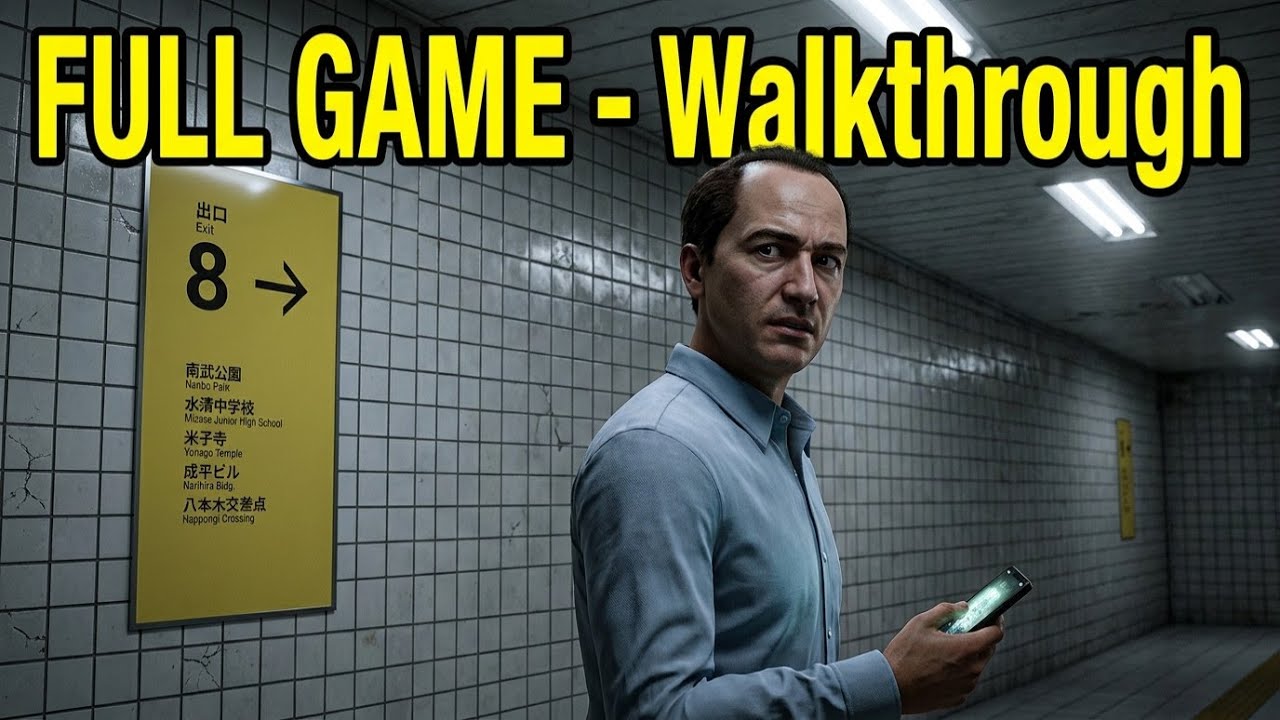
The Exit 8
Playlist by TheGamerBay LetsPlay
Description
The Exit 8, developed by Japanese indie studio KOTAKE Create and released in late 2023, represents a fascinating evolution in the psychological horror and walking simulator genres. By merging the unsettling aesthetic of liminal spaces with the mechanics of a spot-the-difference puzzle, the game creates an experience that is deeply unnerving despite its minimalistic approach. It strips away the complex narratives and elaborate survival systems typical of modern horror gaming, relying instead on the player's own memory and paranoia to generate a profound sense of tension.
The premise of the game is elegantly simple, yet deeply unsettling. The player finds themselves trapped in a sterile, brightly lit, and seemingly endless underground passageway modeled after a typical Japanese subway station. The environment is aggressively mundane, featuring standard tile walls, a row of advertisement posters, fluorescent ceiling lights, a trio of locked janitorial doors, and a single middle-aged commuter endlessly walking in the opposite direction. This hyper-realistic, everyday setting taps heavily into the concept of liminality, which focuses on transitional spaces that feel eerie when devoid of their usual bustling crowds. It is this intense familiarity that makes the horror so effective. There are no bloodstained walls or decaying ruins, only the quiet dread of a normal place that feels just slightly wrong.
Gameplay in The Exit 8 revolves around a strict set of rules plastered on a sign near the player's starting point. The player must walk down the corridor and carefully observe their surroundings. If they notice any anomaly, meaning anything that deviates from the normal state of the hallway, they must immediately turn around and walk back the way they came. If the hallway is completely normal, they must proceed forward. Successfully following these rules advances the player to the next numbered section of the passageway, indicated by a yellow sign on the ceiling. The ultimate goal is to sequentially progress through the loops until reaching Exit 8, allowing the player to climb the stairs and escape into the outside world. However, if the player misses an anomaly and walks forward, or imagines an anomaly and turns back prematurely, the counter quietly resets to zero, trapping them in the loop once again.
The brilliance of the game lies in the execution of the anomalies themselves. They range from blatantly terrifying to devilishly subtle. Some anomalies are impossible to miss, such as a sudden flood of red water rushing down the hall, a pair of oversized eyes staring from the ceiling, or the quiet commuter suddenly sprinting toward the player with a contorted, smiling face. However, the true psychological toll comes from the minor alterations. A single advertisement poster might grow slightly in size, the pattern of the floor tiles might be misaligned, or a doorknob might be placed in the center of a door rather than on the side. This forces players into a state of exhausting hyper-vigilance, constantly second-guessing their own memory. As the game progresses, the human mind begins to play tricks on the player, making them wonder if a shadow was always positioned a certain way or if the fluorescent lights were always humming at that specific pitch.
Upon its release, The Exit 8 became a massive viral sensation, particularly among live streamers and video content creators. Its short playtime, usually ranging from thirty minutes to an hour, combined with the suspense of spotting anomalies, made it perfectly suited for a spectator audience. Furthermore, its massive success inadvertently spawned an entirely new micro-genre of indie horror games. A flood of titles set in bullet trains, hospitals, elevators, and airplanes soon followed, all mimicking the localized, anomaly-spotting gameplay loop that KOTAKE Create popularized.
Ultimately, The Exit 8 stands as a masterclass in minimalist game design and psychological manipulation. It proves that terror does not always require grotesque monsters hiding in the dark or complicated backstories. Sometimes, true dread is found in the brightly lit, sterile corridors of our everyday routines, where the slightest deviation from the norm is enough to induce panic and shatter our sense of reality.
Published:
Jun 08, 2026