Oddmar
Playlist by TheGamerBay MobilePlay
Description
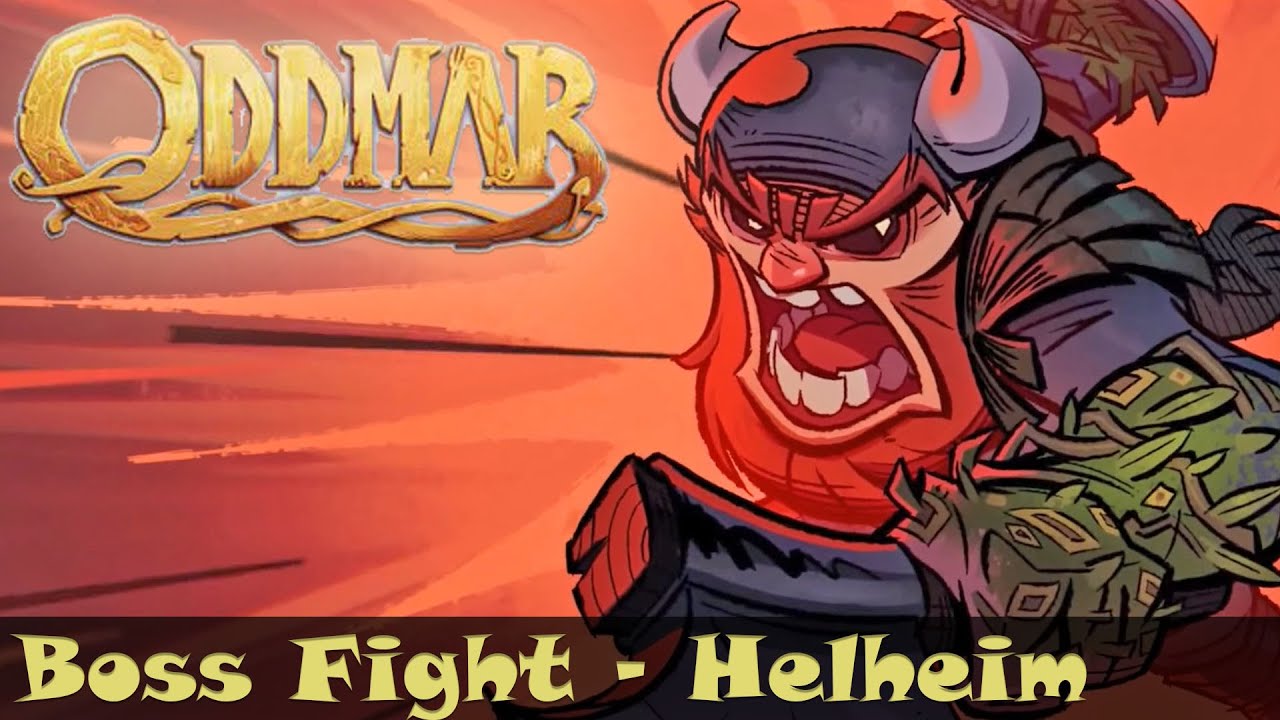
Oddmar is a side-scrolling action-platformer that draws on Norse mythology to tell the story of a disgraced Viking who earns redemption through a vibrant, hand-animated quest. Developed by a small, distributed team that had previously created the mobile hit Leo’s Fortune, the game first launched for iOS in April 2018 and later reached Android, Nintendo Switch, and PC. Although its mechanical frame is familiar—run, jump, slash, and solve environmental puzzles—Oddmar distinguishes itself through lavish production values, nuanced level design, and a narrative that invests the classic platformer arc with personality.
The protagonist, Oddmar, is a lumbering but endearing Viking outcast whose lack of bravery has relegated him to performing petty tasks for his village. After a mysterious encounter with a forest fairy, he receives enchanted mushrooms that grant him a powerful mid-air dash and the ability to burn obstacles. Spurred by the promise of a heroic destiny, he sets out to prove his worth, battling trolls, spirits, and colossal bosses across 24 story levels set in varied biomes: evergreen forests, frozen mountains, lava-filled forges, and mystical dreamscapes. Each level is punctuated by cut-scene panels reminiscent of European comic art, voiced by a single narrator whose wry storytelling lends warmth and humor.
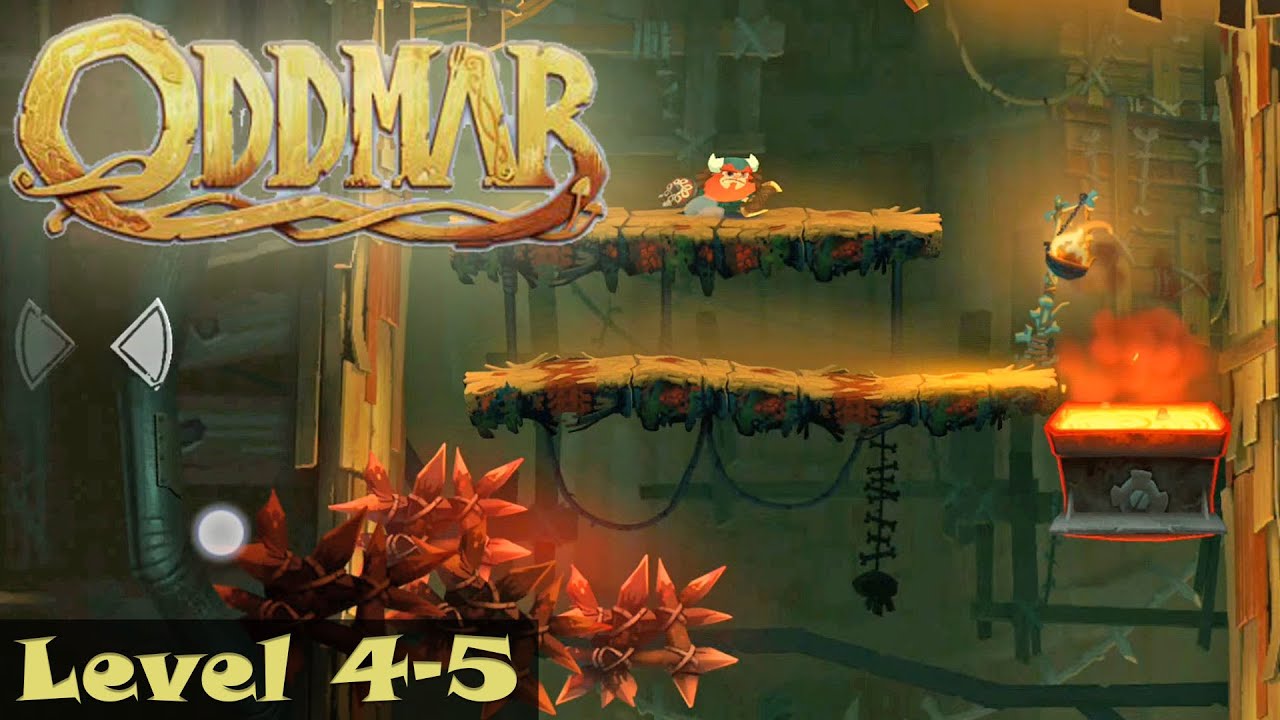
Gameplay melds the precision of classic 16-bit platformers with modern touch controls. Players tap or swipe to jump, dash, butt-stomp, or throw an axe; on Switch and PC these gestures are mapped to buttons and analog sticks. The dash is the mechanical lynchpin—used to cross gaps, ricochet between walls, and gain height—leading to level designs that reward experimentation. Hidden within stages are “Valkyrie tokens” that unlock optional challenge realms: compact gauntlets rife with deadly traps that emphasize timing and pattern recognition. The designers strike a generous difficulty curve: accessible early on, yet culminating in multi-phase boss fights that demand mastery of movement and quick reflexes. A three-star scoring system for time, collectibles, and deaths invites replay for perfectionists but remains voluntary for casual players.
Oddmar’s aesthetic is arguably its most celebrated attribute. Every frame is drawn and animated by hand, bringing to life lush parallax backgrounds, expressive character sprites, and fluid motion akin to a modern cartoon. The color palette balances earthy tones with saturated highlights, evoking both the grounded grit of Viking folklore and the whimsy of a fairy tale. Dynamic lighting effects and particle systems—subtle snow flurries, swirling embers, shimmering water—add depth without overwhelming the visuals on small screens. The orchestral soundtrack, composed by Pärt Uusberg and others, mixes Nordic folk instruments with cinematic strings, shifting from lilting village melodies to percussive battle themes. Foley work and creature vocalizations enhance immersion, while comedic grunts and exclamations humanize Oddmar as an underdog hero.
Development began around 2015 under the studio name MobGe, later partnering with Turkish publisher Crescent Moon and, for console/PC ports, with the UK’s Game Makers. The team cited influences such as Rayman Legends, Don Bluth animation, and the narrative focus of Pixar shorts. Building a sophisticated engine that could accommodate fluid physics, high-resolution assets, and consistent 60 fps performance on mobile hardware posed logistical challenges. Rather than procedural animation, the artists produced thousands of bespoke frames, so compression techniques were needed to keep file sizes manageable. Touch-screen ergonomics shaped the control scheme: a two-thumb layout with context-sensitive swipes sought to minimize on-screen buttons. Following the iOS release, patches refinined responsiveness, added MFi controller support, and localized text into multiple languages.
Critical reception was broadly laudatory. Reviewers praised the artistry, polished mechanics, and compact storytelling—many drawing parallels to Nintendo’s first-party craftsmanship despite the game’s indie origins. Some critics felt the four-to-five-hour length was brief, and a few highlighted occasional input misreads on older devices, but these caveats were minor against the overall acclaim. Oddmar garnered an Apple Design Award in 2018, was nominated for a D.I.C.E. Award in Outstanding Achievement for an Independent Game, and appeared on year-end best-of lists from TouchArcade, Pocket Gamer, and Polygon. Commercially, it followed a premium pricing model—rare in a mobile landscape dominated by free-to-play—yet excelled through strong word of mouth and periodic sales.
Published:
Jan 22, 2021