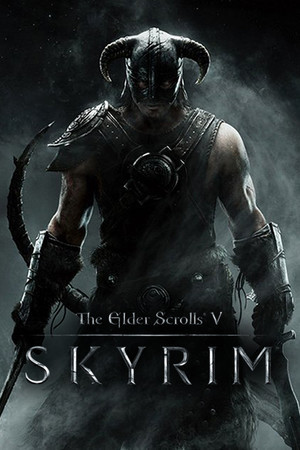
The Elder Scrolls V: Skyrim
Bethesda Softworks (2011)
Description
Released on the auspicious date of November 11, 2011, *The Elder Scrolls V: Skyrim* is an action role-playing game developed by Bethesda Game Studios and published by Bethesda Softworks. As the fifth main installment in *The Elder Scrolls* series, it followed the critically acclaimed *Oblivion* (2006) but managed to eclipse its predecessor in both cultural impact and commercial success. Set in the cold, northern province of Tamriel, the game became a defining title of its generation, celebrated for its vast open world, freedom of choice, and a modding community that has kept it relevant for more than a decade.
The narrative takes place 200 years after the events of *Oblivion*, in a world torn apart by political turmoil and ancient prophecy. The High King of Skyrim has been murdered, triggering a civil war between the Stormcloaks, a nationalist rebellion led by Jarl Ulfric Stormcloak, and the Imperial Legion, commanded by General Tullius, who seeks to maintain the Empire’s control. Amidst this human conflict, a far greater threat emerges: Alduin, the "World-Eater," an ancient dragon prophesied to destroy the world. The player assumes the role of the "Last Dragonborn" (or *Dovahkiin*), a mortal with the soul of a dragon, capable of absorbing dragon souls and wielding their power in the form of the Voice.
Gameplay in *Skyrim* is characterized by its open-ended nature. Unlike many RPGs that lock players into specific classes, *Skyrim* utilizes a "learn by doing" leveling system. Using a one-handed sword increases the One-Handed skill, while sneaking improves the Sneak skill. This organic progression allows for hybrid playstyles, such as a "spellsword" or a stealth archer. A central mechanic is the "Thu'um" or Dragon Shouts—magical words of power that produce effects ranging from breathing fire to slowing time or summoning storms. The game world is populated with dynamic "Radiant Quests," which generate tasks based on the player's location and progress, ensuring that the list of objectives is theoretically endless.
From a technical and artistic standpoint, *Skyrim* was a significant leap forward for Bethesda. It was the first game built on the Creation Engine, a new iteration of the studio's technology designed to handle the massive scale and draw distances of the mountainous region. The visual design departed from the generic European fantasy of *Oblivion* in favor of a rugged, "ancient nord" aesthetic inspired by Scandinavian landscapes and Viking culture. The atmosphere was heavily bolstered by Jeremy Soule’s iconic soundtrack. The main theme, "Dragonborn," famously featured a choir of thirty people singing in the game's fictional draconic language, layered three times to sound like a chorus of ninety barbarian warriors.
Bethesda supported the game post-launch with three major downloadable content (DLC) expansions. *Dawnguard* focused on a conflict between an ancient order of vampire hunters and the Volkihar vampire clan, introducing the Vampire Lord transformation. *Hearthfire* took a different approach, allowing players to purchase land and build their own customizable homesteads, as well as adopt children. The final expansion, *Dragonborn*, was the most substantial, transporting players to the ash-covered island of Solstheim (a callback to *The Elder Scrolls III: Morrowind*) and pitting them against the first Dragonborn, Miraak.
The legacy of *Skyrim* is difficult to overstate. Commercially, it is a juggernaut; initially shipping 7 million copies in its first week, it has since sold over 60 million copies worldwide, ranking it among the best-selling video games of all time. Critically, it won over 200 "Game of the Year" awards from major outlets like the Spike Video Game Awards, D.I.C.E. Awards, and the Game Developers Choice Awards. Culturally, it permeated the internet, most notably through the "arrow in the knee" meme—a repetitive line of dialogue from town guards that became a global phenomenon.
Perhaps the most enduring aspect of *Skyrim* is its longevity, fueled by multiple re-releases and a dedicated modding community. Bethesda has ported the game to nearly every modern platform, including a *Special Edition* with enhanced graphics, a *VR* version, and an *Anniversary Edition* celebrating ten years of the title. Meanwhile, modders have fixed bugs, overhauled graphics, and added entirely new lands and questlines, effectively turning *Skyrim* into a platform for endless creativity. Even years after its release, *The Elder Scrolls V: Skyrim* remains a benchmark for open-world design, offering a level of immersion and freedom that few games have managed to replicate.
Release Date: 2011
Genres: Open World, RPG, Action role-playing, ARPG
Developers: Bethesda Game Studios
Publishers: Bethesda Softworks
Price:
Steam: $19.99