
Diablo II: Lord of Destruction
Blizzard Entertainment (2001)
Description
Released in June 2001, *Diablo II: Lord of Destruction* is the definitive expansion pack for the seminal action role-playing game *Diablo II*. Developed by Blizzard North and published by Blizzard Entertainment, the expansion not only continued the narrative of the base game but also introduced mechanics and features that fundamentally altered the genre, cementing the title’s status as one of the most influential video games of all time.
**The Narrative: The Pursuit of Baal**
The expansion adds a fifth chapter, Act V, which takes place in the frigid, mountainous region of Harrogath at the base of Mount Arreat. The story follows the player’s pursuit of Baal, the Lord of Destruction and the final surviving Prime Evil. Having reclaimed his Soulstone from the narrator Marius, Baal lays siege to the Barbarian homeland with the intent of reaching the Worldstone—a colossal crystal of immense power that created the world of Sanctuary.
The narrative arc of Act V is desperate and grim. Players must break Baal’s siege, traversing the Bloody Foothills and the crystalline caverns of the mountain. A pivotal moment in the lore occurs at the Arreat Summit, where the player must defeat the Ancients—spirits of nephalem guardians—to prove their worthiness to enter the Worldstone Keep. The expansion concludes with a bittersweet victory: while the player defeats Baal, the demon has already corrupted the Worldstone. The archangel Tyrael determines that the corrupted stone threatens all of existence and throws his sword, El'druin, into it, shattering the crystal and triggering a cataclysm that changes the world forever—a cliffhanger that would not be resolved until *Diablo III* over a decade later.
**New Character Classes**
*Lord of Destruction* introduced two new playable classes, bringing the total roster to seven.
* **The Druid:** A versatile shapeshifter and master of nature magic. The Druid can transform into a Werewolf or Werebear, granting massive physical boosts and unique attacks. Alternatively, he can command the elements, casting fissures of fire or tornadoes of wind. His summoning tree allows him to call upon wolves, bears, and spirits that provide passive auras to the party.
* **The Assassin:** A martial artist who specializes in traps and shadow disciplines. She utilizes a "charge-up" mechanic, building power with consecutive strikes before releasing it in a devastating finishing move. Her Trap tree allows her to lay sentries that shoot lightning or fire, while her Shadow disciplines offer utility, such as a "Shadow Master" clone that fights alongside her.
**Revolutionizing Itemization: Runes and Runewords**
Perhaps the most enduring legacy of the expansion is the introduction of Runes. These small stone tablets can be socketed into gear to provide individual bonuses, but their true power lies in "Runewords." By placing specific runes in a specific order into an item with the exact number of sockets, players can create items with unique properties that often rival or surpass the game’s rarest unique items. Runewords like "Enigma" (which grants the Teleport spell to any class) or "Breath of the Dying" became the gold standard for high-level play, creating a deep, complex economy driven by rune rarity.
The expansion also added **Jewels**, which serve as versatile socket fillers with random magical properties, and **Charms**, items that provide passive bonuses simply by sitting in the player’s inventory. This introduced a strategic trade-off, forcing players to balance their combat power against their available inventory space for loot.
**Gameplay Enhancements**
*Lord of Destruction* implemented sweeping quality-of-life changes that modernized the *Diablo II* experience:
* **Mercenaries:** In the base game, hirelings were temporary and weak. The expansion allowed players to equip mercenaries with armor and weapons, heal them with potions, and resurrect them if they died. They could also follow the player across all Acts, becoming integral to solo gameplay builds.
* **Resolution and Stash:** The expansion increased the maximum screen resolution from 640x480 to 800x600, offering a wider field of view critical for ranged combat. It also doubled the size of the personal stash and added a secondary weapon swap slot, allowing players to switch tactical loadouts instantly with the 'W' key.
* **Ethereal Items:** A new class of items called "Ethereal" was introduced. These items possessed superior statistics but could not be repaired, breaking permanently once durability reached zero. This added a layer of risk-reward, or necessitated the use of the "Zod" rune (which makes items indestructible) to preserve them.
**Endgame Evolution and Legacy**
While the expansion launched in 2001, its lifespan was extended significantly by post-release support, particularly Patch 1.10 and 1.11. These updates introduced the "Pandemonium Event" (often called Uber Tristram), a grueling endgame challenge requiring players to farm keys from super-unique monsters to open portals to harder versions of the game's bosses. Defeating them yielded the "Hellfire Torch," a powerful unique charm. Another event, the "Diablo Clone," was triggered by the sale of Stone of Jordan rings to merchants, spawning an ultra-powerful version of Diablo who dropped the "Annihilus" charm.
The legacy of *Diablo II: Lord of Destruction* is immense. It refined the loot-hunting loop that defines the ARPG genre. Its dark, gothic atmosphere and intricate skill system set a bar that many argue has never been surpassed. In 2021, this legacy was honored with the release of *Diablo II: Resurrected*, a faithful remaster that runs on top of the original code, proving that the mechanics designed by Blizzard North two decades prior remain compelling to this day.
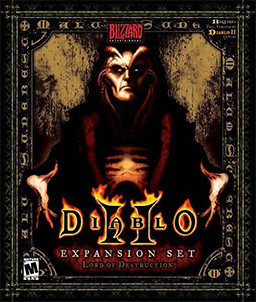
Release Date: 2001
Genres: Action role-playing
Developers: Blizzard North
Publishers: Blizzard Entertainment


