Warcraft II: Tides of Darkness
Na, EU, Davidson & Associates (1995)
Description
Released in 1995, Warcraft II: Tides of Darkness stands as a monumental entry in the real-time strategy (RTS) genre, developed by Blizzard Entertainment and Cyberlore Studios, and published by Davidson & Associates across North American and European markets. As the direct sequel to the 1994 sleeper hit *Warcraft: Orcs & Humans*, this title did not merely iterate on its predecessor’s formula; it refined and expanded the mechanics of resource management and tactical warfare to a degree that would define the genre for the next decade. By moving the conflict from the southern kingdom of Azeroth to the northern continent of Lordaeron, the game introduced a richer narrative and a more sophisticated strategic depth that cemented Blizzard’s reputation as a premier game developer.
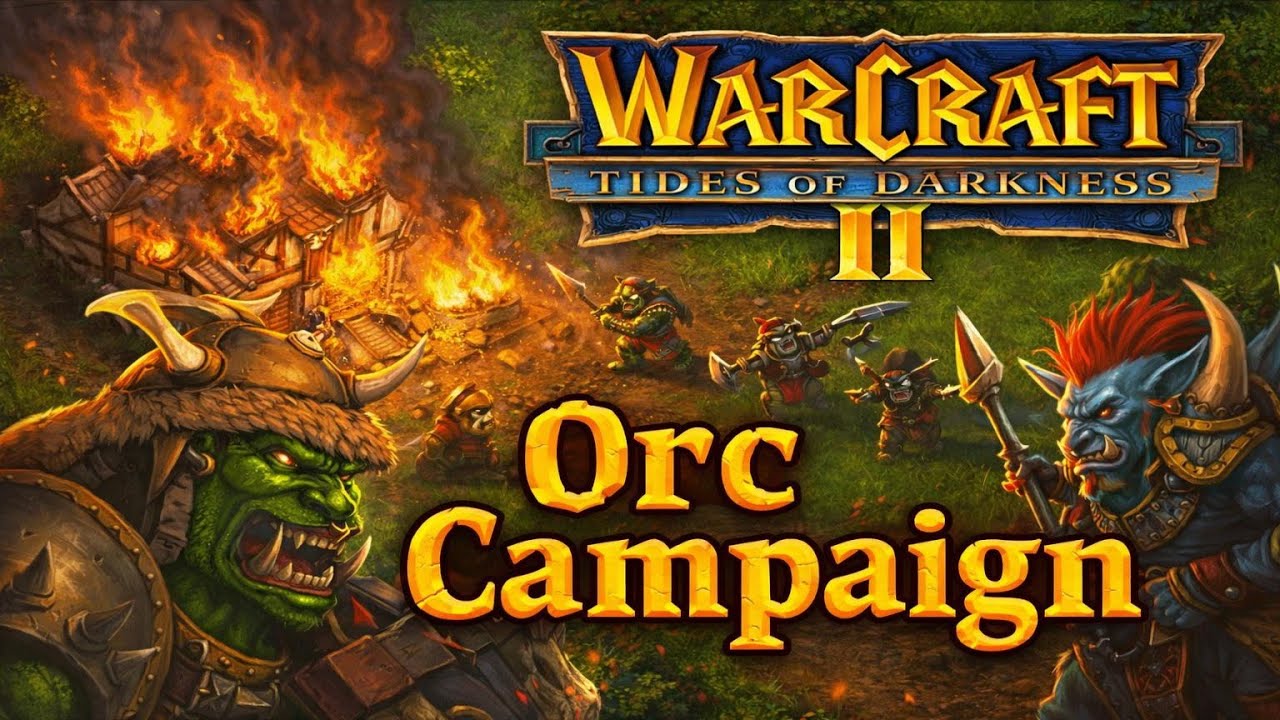
The narrative of *Tides of Darkness* chronicles the Second War, a conflict of desperate escalation. Following the destruction of Stormwind in the first game, the human survivors, led by Sir Anduin Lothar, flee north to the kingdom of Lordaeron. There, they forge the Alliance of Lordaeron, uniting humans, high elves, gnomes, and dwarves against the encroaching Orcish Horde. The Horde, under the command of Warchief Orgrim Doomhammer, has simultaneously bolstered its ranks with trolls, ogres, and goblins. This expansion of lore served not only to provide a backdrop for the campaign missions but also to establish the enduring factional identities—the Alliance and the Horde—that would become the cultural bedrock of the *Warcraft* franchise.
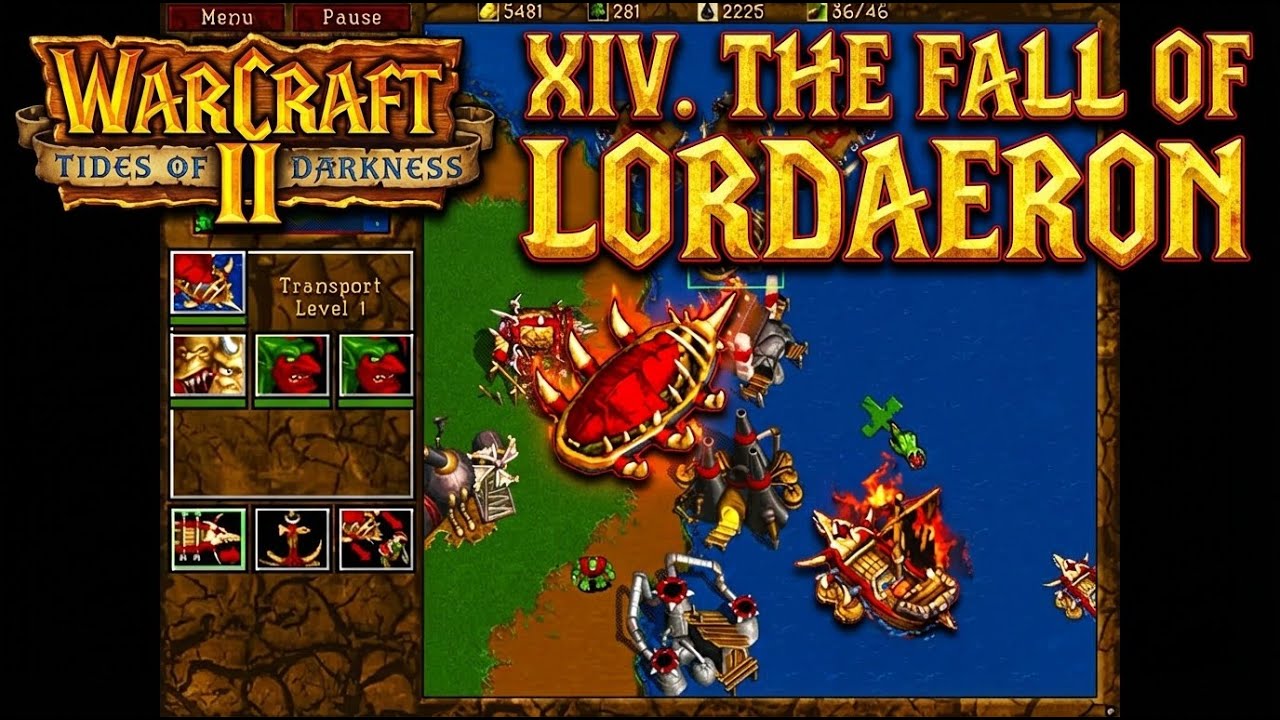
Mechanically, the game adhered to the "gather, build, destroy" loop popularized by *Dune II*, but with significant enhancements that improved playability and pacing. Players are tasked with gathering three primary resources: gold, lumber, and the newly introduced oil. The addition of oil was transformative, necessitating the construction of offshore platforms and tankers. This third resource was the gateway to the game’s naval combat, a feature that distinguished *Warcraft II* from its competitors. The introduction of naval warfare allowed for complex amphibious assaults, where players had to manage distinct land and sea fleets, utilizing transport ships to ferry ground troops across island-dotted maps while battleships, destroyers, and submarines vied for maritime dominance.
The unit roster in *Warcraft II* is often cited for its "symmetry with flavor." While the two factions were statistically similar to ensure balance—human Footmen mirrored orc Grunts, and Elven Archers mirrored Troll Axethrowers—the higher-tier units diverged in ways that affected late-game strategy. The Alliance could deploy Paladins, holy warriors capable of healing injured troops and exorcising the undead, and Mages who could cast Polymorph to turn enemies into harmless sheep. Conversely, the Horde fielded Ogre Mages, who could cast Bloodlust to drastically increase unit attack speed, and Death Knights, who wielded dark magics like Decay and Raise Dead. The introduction of air units, specifically the Gnomish Flying Machines and Goblin Zeppelins for reconnaissance, alongside the devastating Gryphon Riders and Dragons for aerial bombardment, added a third vertical layer to the combat, forcing players to build diversified armies.
Technologically, *Warcraft II* was a significant leap forward. It utilized high-resolution SVGA graphics (640x480), a stark upgrade from the low-fidelity visuals of the era. This allowed for a vibrant, cartoon-like art style that aged remarkably well. The terrain was varied, featuring snow-covered wastelands, lush forests, and murky wastelands, all shrouded by a "fog of war" that necessitated constant scouting—a mechanic that became an industry standard. The audio design was equally influential; units responded to commands with distinct, often humorous voice lines that gave them personality ("Zug zug," "My liege?"), while the orchestral soundtrack underscored the epic scale of the conflict.
The game's development history notes the involvement of Cyberlore Studios, primarily known for their work on the expansion pack, *Warcraft II: Beyond the Dark Portal*. Released in 1996, this expansion increased the difficulty significantly and introduced "hero" units with unique stats, further bridging the gap between RTS gameplay and character-driven storytelling. The legacy of *Warcraft II* was further extended by the release of the *Battle.net Edition* in 1999, which transitioned the game from DOS to Windows and integrated Blizzard’s online matchmaking service, Battle.net. This move was pivotal in fostering a global multiplayer community, laying the groundwork for the esports phenomenon that Blizzard would later capture with *StarCraft*.
Critically, *Warcraft II: Tides of Darkness* was a resounding success, selling over a million copies quickly and winning numerous "Game of the Year" awards. It is credited with bringing the RTS genre to a mass audience, proving that strategy games could be both intellectually demanding and visually accessible. By refining the user interface—allowing players to group-select units and use context-sensitive commands—it removed the clunky barriers of earlier titles, allowing the player's focus to remain on strategy rather than input management. Ultimately, *Warcraft II* was the crucible in which Blizzard's signature style was forged, creating a legacy of polished, lore-rich, and addictive gameplay that continues to influence the video game industry.
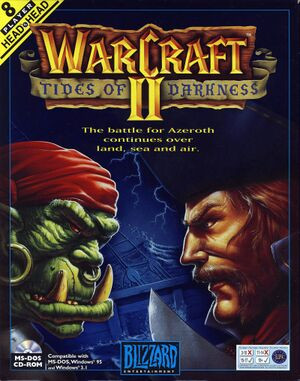
Release Date: 1995
Genres: Real-time strategy, RTS
Developers: Cyberlore Studios, Blizzard Entertainment
Publishers: Na, EU, Davidson & Associates